
shoulder stabilization exercises pdf
Understanding Shoulder Stabilization
The shoulder’s complex anatomy, involving bones, muscles, ligaments, and tendons, makes it prone to instability and injury. Understanding these elements is crucial for effective rehabilitation.
Anatomy of the Shoulder Joint
The shoulder joint is remarkably complex, comprised of four distinct joints working in concert to facilitate movement and maintain stability. These include the glenohumeral joint – the primary ball-and-socket connection between the humerus (upper arm bone) and the scapula (shoulder blade) – alongside the acromioclavicular, sternoclavicular, and scapulothoracic articulations.
Key bony landmarks include the clavicle (collarbone), scapula, and humerus. The glenoid fossa, a shallow socket on the scapula, receives the humeral head. This inherently unstable arrangement relies heavily on surrounding soft tissues – muscles, ligaments, and the labrum – for support; The rotator cuff, a group of four muscles, plays a vital role in both movement and dynamic stabilization. Understanding this intricate anatomy is fundamental to comprehending shoulder instability and guiding rehabilitation efforts.
The Role of the Labrum in Shoulder Stability
The shoulder labrum is a crucial component of shoulder stability, acting as a fibrocartilaginous rim surrounding the glenoid fossa. This thick tissue deepens the socket, effectively increasing the surface area for the humeral head to articulate with, and enhancing joint congruity. It serves to contain the humeral head within the joint, resisting translation and contributing to overall stability.
Tears in the labrum can significantly compromise shoulder function, leading to feelings of instability and pain. These tears can occur in various patterns, ranging from partial to complete detachment from the bone. The labrum’s role extends beyond simple mechanical containment; it also serves as an attachment point for ligaments and contributes to joint proprioception – the sense of joint position. Maintaining labral integrity, or addressing tears appropriately, is paramount for optimal shoulder stability.
Key Muscle Groups for Shoulder Stabilization
Shoulder stability isn’t solely reliant on static structures; dynamic control from surrounding musculature is essential. The shoulder joint’s inherent instability necessitates a robust network of muscles working in coordination. Key players include the rotator cuff muscles – supraspinatus, infraspinatus, teres minor, and subscapularis – which compress the humeral head into the glenoid, providing dynamic stability and controlling rotation.

Alongside the rotator cuff, the deltoid muscle plays a vital role, contributing to shoulder abduction, flexion, and extension. However, its action must be carefully coordinated with the rotator cuff to prevent impingement and maintain proper joint mechanics. Scapular stabilizers, such as the trapezius and serratus anterior, are also critical, providing a stable base for humeral movement and optimizing shoulder function.
Rotator Cuff Muscles
The rotator cuff, comprised of the supraspinatus, infraspinatus, teres minor, and subscapularis, is paramount for shoulder stability and function. These muscles don’t just initiate movement; they actively compress the humeral head into the glenoid fossa, the shoulder socket, enhancing joint congruity and preventing dislocation. The supraspinatus initiates abduction, while the infraspinatus and teres minor handle external rotation.
Conversely, the subscapularis facilitates internal rotation. Their coordinated action creates a dynamic stabilizing force, resisting translational forces and controlling the shoulder’s range of motion. Strengthening these muscles is crucial in rehabilitation protocols following injury, as weakness can significantly contribute to instability. Targeted exercises focus on isolating and strengthening each muscle individually, restoring optimal shoulder mechanics and preventing recurrent issues.
Deltoid Muscle
The deltoid muscle, a large, triangular muscle covering the shoulder, plays a vital role in shoulder movement and, importantly, contributes to overall stability. While not a primary dynamic stabilizer like the rotator cuff, the deltoid provides essential force and control during various arm motions. It’s divided into anterior, middle (acromial), and posterior portions, each responsible for different aspects of shoulder elevation, abduction, and extension.
Strengthening the deltoid is crucial for functional shoulder health, but it must be balanced with rotator cuff work to avoid imbalances that could exacerbate instability. Rehabilitation programs often incorporate deltoid exercises alongside rotator cuff strengthening to ensure comprehensive shoulder conditioning. Proper form and controlled movements are essential to prevent compensatory patterns and maximize effectiveness during exercises.
Common Shoulder Injuries Leading to Instability
Shoulder instability often arises from injuries disrupting the normal mechanics of the joint. Labral tears, where the cartilage rim of the shoulder socket is damaged, are a frequent culprit, compromising the socket’s depth and ability to contain the humeral head. Rotator cuff tears, impacting the muscles that stabilize the shoulder, can also lead to instability, particularly with overhead activities.
Dislocations, where the humeral head completely exits the socket, are a significant cause, often resulting in ligament damage and recurrent instability. Even subluxations – partial dislocations – can stretch ligaments and contribute to long-term problems. These injuries create a cascade of issues, weakening the shoulder’s inherent stability and increasing vulnerability to further injury. Addressing these underlying issues is key to successful rehabilitation.

Non-Surgical Rehabilitation for Shoulder Instability
Rehabilitation focuses on restoring neuromuscular control and strengthening key muscles. Proprioceptive training and targeted exercises rebuild stability, avoiding or delaying surgical intervention.
Improving Neuromuscular Control
Neuromuscular control is paramount in shoulder rehabilitation, as it directly impacts the coordinated movement and stability of the joint. Following an injury or period of instability, the communication between the brain and shoulder muscles often becomes disrupted.
Re-establishing this connection requires specific exercises designed to challenge the muscles’ ability to react and stabilize the shoulder dynamically. This isn’t simply about strength; it’s about retraining the nervous system to anticipate and control movements effectively.
Exercises initially focus on gentle, controlled motions, gradually increasing in complexity and resistance. The goal is to improve proprioception – the body’s awareness of its position in space – and enhance the timing and sequencing of muscle activation. This improved control minimizes the risk of re-injury and optimizes shoulder function.
Proprioceptive Neuromuscular Facilitation (PNF)
Proprioceptive Neuromuscular Facilitation (PNF) techniques are highly effective in restoring shoulder stability by targeting both muscle activation and proprioception. PNF involves specific patterns of muscle contraction and relaxation, often with a partner providing resistance or assisting movement.
These techniques utilize diagonal movement patterns that mimic natural shoulder motions, engaging multiple muscle groups simultaneously. A common PNF approach involves a “contract-relax” sequence, where the patient contracts the target muscle against resistance, then relaxes it, allowing for a greater range of motion.
PNF helps to improve muscle firing patterns, increase joint range of motion, and enhance neuromuscular control. It’s particularly beneficial for individuals recovering from shoulder instability, as it retrains the muscles to respond quickly and efficiently to changes in position and force, ultimately improving dynamic stability.
Shoulder Stabilization Exercises
A progressive exercise program is vital for regaining shoulder stability, starting with gentle range of motion and progressing to strengthening and functional movements.
Phase 1: Early Range of Motion & Scapular Stabilization
This initial phase focuses on restoring pain-free movement and establishing a solid foundation of scapular control. Begin with Pendulum Exercises, gently swinging your arm in small circles while leaning forward, allowing gravity to assist. This promotes gentle joint mobilization without stressing the injured tissues.

Next, incorporate Scapular Retractions. Sitting or standing with good posture, squeeze your shoulder blades back and down, as if trying to hold a pencil between them. Hold for a few seconds, then relax. This strengthens the muscles responsible for controlling scapular movement, which is essential for proper shoulder mechanics.
Perform these exercises frequently throughout the day, focusing on controlled movements and avoiding any sharp pain. The goal is to gently re-establish range of motion and activate the muscles that support the shoulder blade, preparing for more advanced strengthening exercises in subsequent phases.
Pendulum Exercises
Pendulum exercises are a cornerstone of early shoulder rehabilitation, designed to gently restore range of motion and reduce pain. To perform, lean forward, supporting your weight with your non-affected arm on a table or chair. Allow the affected arm to hang freely, relaxed.
Initiate small, circular movements with your arm, swinging it gently in clockwise and counterclockwise directions. You can also swing it forward and backward, and side to side. The movement should be driven by your body weight and momentum, not by actively contracting your shoulder muscles.
Start with small circles and gradually increase the range of motion as tolerated. Perform 10-20 repetitions in each direction, several times a day. This exercise minimizes stress on the shoulder joint while promoting fluid movement and reducing stiffness, preparing it for more demanding exercises.
Scapular Retractions
Scapular retractions are fundamental for establishing proper shoulder blade positioning and strengthening the muscles responsible for scapular stability. Begin by sitting or standing with good posture, shoulders relaxed. Imagine squeezing your shoulder blades together, as if trying to hold a pencil between them.
Focus on drawing your shoulder blades back and down, avoiding any shrugging or lifting of the shoulders. Hold the retracted position for 2-3 seconds, feeling the muscles between your shoulder blades engage. Slowly release and return to the starting position.
Perform 10-15 repetitions, focusing on controlled movement and proper form. This exercise strengthens the rhomboids and trapezius muscles, crucial for maintaining optimal shoulder mechanics and preventing impingement. Regular practice improves posture and provides a stable base for shoulder movement.
Phase 2: Rotator Cuff Strengthening
Transitioning to rotator cuff strengthening is vital after establishing a foundation of range of motion and scapular control. This phase focuses on rebuilding strength and endurance in the muscles responsible for dynamic shoulder stability. Begin with light resistance, gradually increasing as strength improves.
Exercises should be performed with controlled movements, emphasizing proper form over the amount of weight or resistance used. Focus on isolating the rotator cuff muscles, avoiding compensatory movements from larger muscle groups. Consistency is key; aim for 2-3 sessions per week.
Prioritize exercises like external and internal rotation with resistance bands, focusing on slow, deliberate repetitions. This phase prepares the shoulder for more advanced strengthening and functional activities, reducing the risk of re-injury.
External Rotation with Resistance Band
This exercise targets the infraspinatus and teres minor, crucial external rotators of the shoulder. Secure a resistance band to a stable object at elbow height. Keeping your elbow tucked into your side at a 90-degree angle, slowly rotate your forearm outward, away from your body.
Maintain a controlled movement throughout the exercise, avoiding any jerking or momentum. Focus on squeezing the shoulder blade back and down during the rotation to engage the posterior shoulder muscles. Hold the end position for a brief moment, then slowly return to the starting position.
Perform 2-3 sets of 10-15 repetitions, adjusting the band resistance as needed to maintain proper form. This exercise improves external rotation strength and stability, essential for preventing shoulder impingement and instability.
Internal Rotation with Resistance Band
Strengthening the subscapularis, the primary internal rotator of the shoulder, is vital for balanced shoulder function. Anchor a resistance band securely, positioning it at elbow height. With your elbow bent at 90 degrees and held firmly against your side, slowly rotate your forearm inward, towards your abdomen.
Maintain a controlled motion, resisting the urge to use momentum. Concentrate on keeping your shoulder blade stable and avoiding any forward movement of the shoulder. A slight squeeze of the shoulder blade can enhance muscle engagement. Hold the contracted position briefly before slowly returning to the starting point.
Complete 2-3 sets of 10-15 repetitions, modifying the band’s resistance to challenge your muscles appropriately. This exercise enhances internal rotation strength and contributes to overall shoulder stability.
Phase 3: Advanced Strengthening & Functional Exercises
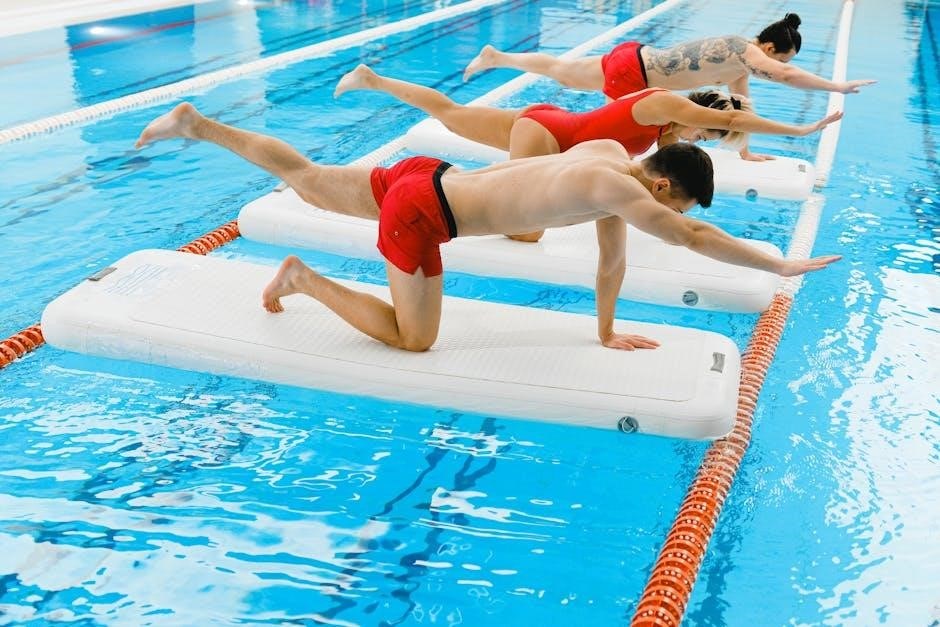
This phase focuses on integrating strength gains into dynamic movements, mimicking real-life activities. The goal is to enhance neuromuscular control and prepare the shoulder for functional demands. Exercises progress to include more complex patterns and increased resistance.
Shoulder Clock exercises challenge the shoulder through a full range of motion, strengthening multiple muscle groups simultaneously; Resistance training, utilizing dumbbells or cable machines, further builds strength and endurance. Focus on maintaining proper form throughout each exercise to prevent re-injury.
Functional movements, like reaching overhead or simulating throwing motions, are incorporated to bridge the gap between rehabilitation and everyday activities. This phase requires consistent effort and attention to detail to achieve optimal shoulder stability and return to full function.
Shoulder Clock Exercise
The Shoulder Clock exercise is a dynamic movement designed to improve range of motion and strengthen the muscles surrounding the shoulder joint. Imagine a clock face in front of you, with your elbow bent at 90 degrees and positioned at the center.
Slowly move your forearm towards each “hour” on the clock face, maintaining control and focusing on engaging the shoulder muscles. This movement targets various aspects of shoulder stability, including internal and external rotation, flexion, and abduction.
Perform 10-15 repetitions in each direction, ensuring a smooth and controlled motion. This exercise can be modified by adding light resistance, such as a resistance band, to increase the challenge as strength improves. Proper form is crucial to avoid strain and maximize effectiveness.
Resistance Training for Shoulder Stability
Progressing to resistance training is vital for building lasting shoulder stability after foundational exercises. Utilizing resistance bands or light weights, focus on controlled movements that mimic functional activities.
Exercises like rows, shoulder presses, and bicep curls strengthen the surrounding musculature, enhancing joint support. Prioritize proper form over lifting heavy weights to prevent re-injury. Begin with 2-3 sets of 10-12 repetitions for each exercise.
Gradually increase the resistance as strength improves, ensuring continued challenge without compromising technique. Incorporate exercises that target all planes of motion to address comprehensive shoulder stability. Regular resistance training is key to maintaining long-term shoulder health and preventing future instability episodes.
Resources & Further Information
For a comprehensive understanding and guided practice, numerous resources are available to supplement your shoulder stabilization journey. Searching online for “shoulder stabilization exercises pdf” yields a wealth of printable guides detailing various exercises and rehabilitation protocols.
Websites of reputable orthopedic institutions and physical therapy clinics often provide detailed exercise instructions and videos. YouTube channels dedicated to fitness and rehabilitation offer visual demonstrations of proper form and technique.
Consulting with a physical therapist or athletic trainer is highly recommended for personalized guidance and program development. They can assess your specific needs and tailor exercises accordingly. Remember to prioritize credible sources and always listen to your body, modifying exercises as needed to avoid pain or discomfort.